
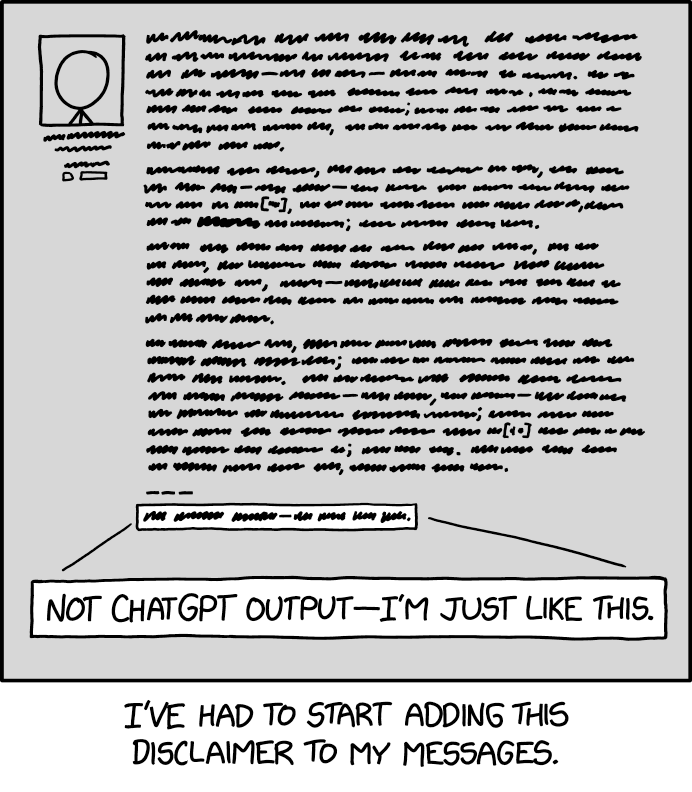
Obligatory disclaimer: https://xkcd.com/3126/
It's been quite awhile since I made a long-form text post on this sub. There are a few aspects of tech mod game design that I'd love to talk about such as ore processing and energy systems, but those will have to wait. Today, since I've been playing way too much GTNH, I want to explore the different implementations of one of the universal features of tech mods: The Multiblock Machine.
As far as I'm aware, IC2 was the first mod to have a real "multiblock" – the nuclear reactor, back in 1.2.5. Railcraft followed soon after with its coke oven and blast furnace. The multiblock craze really picked up around 1.4.7 with Forestry multifarms, OG GregTech machine casings, and Railcraft steam boilers. Ever since then, mod authors have iterated on the concept with various designs and gameplay choices, and in this post I'd like to do a retrospective on some of them. I'll be creating a scale of multiblocks based on how set-in-stone their blueprints are versus how much flexibility the player has.
The difference between a "multiblock" and an "automated system" can get a bit sketchy, especially when the multiblocks get more freeform, but the general definition I'm using is that a "multiblock" would break completely if any one piece were removed, while an automated system might still partially work. (For example, you could imagine an ore processing line with a missing piece of pipe still grinding ores, even if it doesn't smelt them; the same cannot be said for a frame quarry that's missing a motor or block breaker.)
A word of warning, most of my examples are going to be pretty old-timey, since that's the type of modded I'm most familiar with. If people have favourite multiblocks that I missed, I'd love to hear about them!
Level 1: Completely hardcoded
Examples: Railcraft Coke Oven / Blast Furnace, Immersive Engineering heavy machinery
Starting us off, we have the multiblocks that straight up don't form unless they're built in the exact way the mod tells you to. Where automation is concerned, some allow for IO anywhere, while others have specific ports that you have to use. But while they're commonly thought of as "glorified magic blocks" (and I'll be honest, I did think of them like this for awhile as well), they have one gameplay advantage beyond the obvious one of requiring more resources: they heavily encourage the player to build a dedicated room for them. This naturally leads to creative base design and planning spaces for these machines – even if they're only built to be used manually rather than automated. They also give a sense of scale to a player's base, as a machine that takes up 36 blocks of space rather than one straight up looks more impressive.
Level 2: Some flexibility
Examples: Railcraft steam boilers and iron tanks, TC4 infusion, IC2 nuclear reactors, Vanilla enchanting tables and portals
These multiblocks give the player just one or two choices to make in their construction. Commonly this choice is size, with larger versions being more expensive and taking up more space but also being more powerful. I put Infusion in this category since the player has freedom to decide the locations of the pedestals as well as freely place stabilizers. Similarly, Vanilla nether portals can be any dimensions, and enchanting tables need to be surrounded by bookshelves but offer freedom in how to do that. They're still pretty cut-and-dry, though, so let's move on.
Level 3: Modular
Examples: GTNH multiblocks, Forestry multifarms
In my opinion, this tier is where things start to get exciting. This is where you really start thinking about machine design beyond just placing blocks where the book tells you to place them. While there's still a blueprint to follow, these machines have extra parts (generally for automation and I/O) that you need to add. You naturally need to think, then, about how to design them to fit nicely with your automation – where to input and output items and fluids, where to supply energy, that sort of thing. Blood Magic's pyramid also fits here, since the choice of which runes to use is a major factor. But what if we weren't constrained at all to a schematic?
Level 4: Do-it-yourself
Example: Create processing lines
At this stage, the line between a multiblock and a straight-up automated system begins to blur. I still consider this tier a multiblock, though, since its individual components don't do anything until you put them together, and even its "processing" components (for example, grinding wheels in Create) are annoying enough to do manually that you may as well automate. It's up to you, the player, to design the system and make it work efficiently. You have an immense amount of freedom here, both functionally and aesthetically, but you're still working within the confines of what's explicitly intended. What if we went a step further?
Level 5: True Unix Philosophy
Example: RedPower frame quarry
I suspect that talking about the Unix philosophy is going to become a running theme in these posts. For the uninitiated, in simple terms, the philosophy states that software should be designed such that a) each program performs exactly one task, and performs it well; and b) programs should be designed to work in conjunction with one another, with the output of one feeding into the input of the next. I consider the difference between level 4 and level 5 to be one of innovation – a level 4 multiblock is expected to be built as part of normal mod progression, while a level 5 one doesn't come along until the player has that "aha!" moment of figuring out that something is possible (or, of course, looks up a design on the internet). I consider frame machines (whether RP2, Funky Locomotion, or Create contraptions) to be the gold standard of level 5 multiblocks, especially if the frames work with blocks from other mods – even though there was no explicit autominer in RedPower 2, you can still build one yourself, not by placing blocks in a specific predetermined configuration, but by designing it from the ground up.
So what's the point of this post?
There isn't one, really. But I like to categorize things, and it's interesting to compare different gameplay designs in different mods. I'm also not saying that every multiblock should be level 4 or 5 – sometimes you do just want a big, imposing machine that's still technically a "magic block". It's why Immersive Engineering is one of my all-time favourite mods despite not having a ton of complexity for the player – the aesthetic theme is so cohesive and really pushes you in the direction of interesting builds.
by lucariomaster2
1 Comment
The scale of multiblock machines are what drew me in to modded minecraft. Create has become my favorite mod, due to many of the projects being multiblock freeform with the gears and belts. It can be annoying to place everything, but I like the freedom to build for efficiency, scale, or appearance.