

There’s a very specific moment in Minecraft Dungeons II when a straightforward dungeon crawl starts looking like somebody has tipped an entire toy box down the stairs. Four players begin blugeoning enemies, friendly-fire TNT wreaths valuable chunks of screen real estate in fire, damage numbers ping off everwhere and then a series of Help, Respawn Me icons sprout.
Basically, Minecraft Dungeons II delivers glorious chaos and a sharper designed sequel all at once. It takes the stripped-back Diablo-style dungeon crawling and starts bolting in deeper character builds, more elaborate gear systems, jumping and traversal abilities, a larger interconnected Overworld and the strange new dimension of the Sift.
Most importantly, though, it manages to make all of those additions feel accessible enough that you can still fling a controller at somebody who’s never touched a dungeon crawler and have them contributing to the carnage within minutes.
The bulk of my early review window was spent playing with my two teenage sons, which provided ample opportunity to discover whether the additional complexity improves the experience or simply gives three people more menus to argue about.
The results were more encouraging than I thought they’d be. The fundamental combat loop remains pleasingly simple. Leave the safety of Brave Haven, wander out into a definitely larger, semi-open-world towards something that looks vaguely interesting and you’ll usually find an excuse to start hitting things within moments.
The difference this time is that movement plays a bigger role. Jumping lets you clear gaps, reach previously inaccessible areas, launch ground-pound attacks and perform plunging strikes, giving encounters a little more physicality than the original’s relatively straightforward hack-and-slash approach.
Weapons also have more distinct attack patterns, strengths and limitations, so choosing equipment isn’t simply a matter of finding the biggest number and calling it a day. I quickly developed favourites and abandoned others that technically looked better on paper but didn’t suit how I wanted to play.
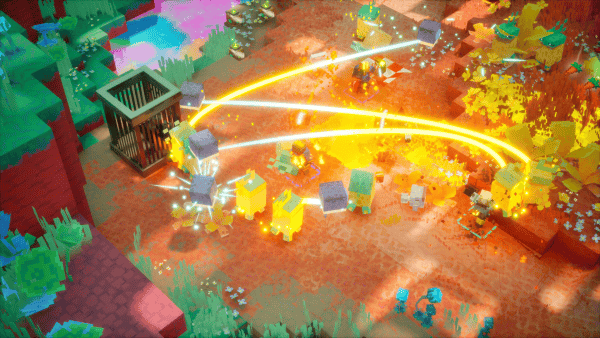
It remains very approachable, too. This is Diablo-lite rather than an action RPG that wants to inspect your reflexes under laboratory conditions. Positioning and timing matter once the screen fills with mobs and increasingly silly attacks, but nobody needs to memorise 47 systems before getting stuck in.
Then the loot starts flowing. Kleptomania remains the delicious little engine driving everything. Every encounter has the potential to produce a better weapon, a more interesting enchantment or some piece of equipment that suddenly makes you rethink your entire build.
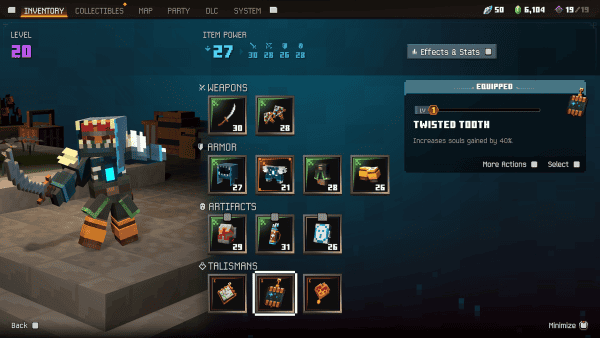
This sequel gives that process considerably more depth. Helmets, chest pieces, leggings, boots, talismans and sub-weapons can all be customised, while equipment comes with different power levels, rarities, effects and enchantments.
More importantly, you’re not completely at the mercy of RNGesus. The Blacksmith can upgrade favourite equipment and reroll its built-in effects using Echo Shards, while the Enchantsmith allows you to work with enchantment books and tailor gear around the way you actually want to play. That means a piece of equipment you love doesn’t necessarily become useless just because something with a slightly larger number has fallen out of the latest chest.
There are no traditional classes, either, so your equipment effectively determines your role. Build around brutal melee attacks, ranged weapons, defensive abilities or some wonderfully stupid combination of all three. The game gives you plenty of room to experiment. It’s a substantial improvement because progression now feels more like building a character than simply watching numbers slowly get larger.
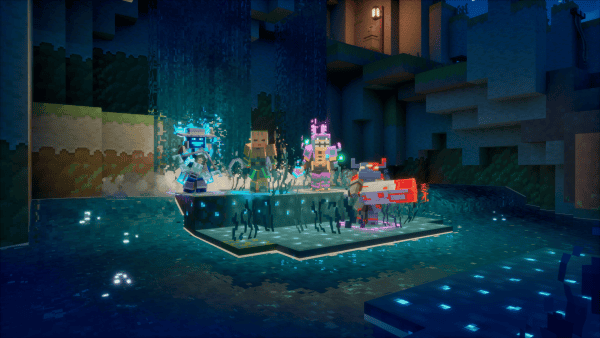
The Overworld is another major departure from the original’s mission-select structure. Settlements, side quests, portals, secrets and procedurally generated areas now sit within a larger connected space, giving you more reasons to stray from whatever objective you’ve been given.
That works particularly well when exploration leads somewhere useful. A suspicious path might reveal a side dungeon, some enemies worth farming, a stash of loot or simply a collection of boxes that desperately need smashing.
Fast travel also keeps the whole thing moving, allowing you to bounce between unlocked portals without spending half an evening retracing your steps.

There is one fairly significant caveat, though. For all the talk of an interconnected world, Minecraft Dungeons II isn’t really open-world. Rivers, ravines and impassable terrain regularly funnel you along predetermined routes, creating enormous corridors that eventually open into combat spaces.
I kept thinking about what this series could do with a genuinely open Minecraft wilderness. The building blocks are clearly here. The game just isn’t ready to knock down all the walls yet.
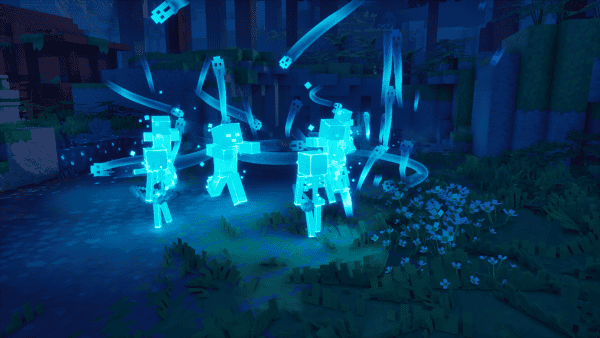
Rifts open the door to the Sift, a procedurally generated dimension that provides some of the sequel’s strangest and most interesting material.

This weird little plane hides its own enemies and environmental rules, while Sift Tides cycle between Thrive, Endure and Flow. Thrive improves soul regeneration and Artifact cooldowns, Endure removes passive soul regeneration while tougher mobs start appearing, and Flow keeps things relatively normal.
It gives the Sift an identity beyond simply being another collection of Minecraft arenas, and I enjoyed the feeling that I was stepping somewhere governed by a different set of rules.
The story behind this entire adventure is considerably less memorable. Three Illagers discover an underground portal, establish the Illager High Council and unleash soul-corrupted forces into this new dimension, with the Twisted Warden eventually becoming everybody else’s problem.
It’s functional. It gets you moving. It gives you things to hit. Nobody is going to be writing Minecraft Dungeons II fan fiction about the Illager High Council, but that’s probably okay.

The deeper systems are useful, but the reason I kept returning was the same reason the original worked so well: this is excellent couch co-op.
Playing with my sons turns even relatively straightforward encounters into ludicrous little events. Someone finds a ridiculous weapon, somebody else starts complaining about their loot luck, another player discovers an interesting build and suddenly we’re all comparing equipment instead of actually progressing through the dungeon.
The sequel makes that process considerably less painful with quick inventory access through the D-pad. You can make equipment changes without repeatedly dragging the entire party into a menu, which is an enormous quality-of-life improvement when three people are waiting to get back to the important business of hitting things.
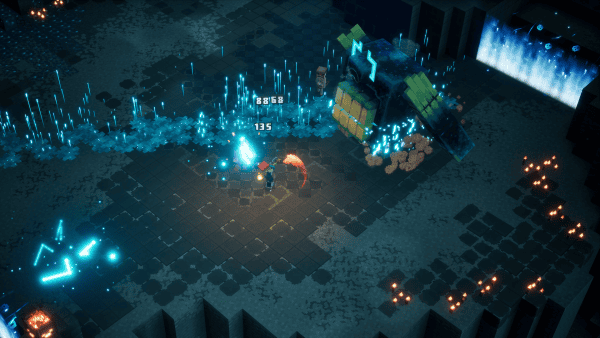
There is still one drawback to the multiplayer madness: four-player combat can become downright overwhelming. Special attacks, projectiles, enemies, particles and damage numbers can turn the screen into an animated weather event, and occasionally you’ll get flattened simply because identifying your own character among the carnage has become an advanced skill.
The upside is that Minecraft Dungeons II looks substantially better while doing it. Unreal Engine 5 adds more environmental detail and improved lighting without sacrificing the chunky Minecraft aesthetic.
Ultimately, this feels like a sequel that understands where the original’s longevity came from. The combat remains immediately approachable, but there’s considerably more character-building and gear tinkering for anyone who wants to disappear down that particular rabbit hole. The Overworld gives exploration more purpose, the Sift introduces a welcome dose of weirdness and the co-op improvements make the whole experience easier to enjoy together.
I still yearn for a genuinely open Minecraft wilderness that this game occasionally teases. But the bigger headline is that Minecraft Dungeons II is larger, deeper and considerably more flexible than its predecessor. It also never forgets that the best bit is still the uncomplicated joy of running into a room full of blocky bastards and making an enormous mess of them with your latest Excalibur drop.
Conclusion
Minecraft Dungeons II adds depth without losing the approachable chaos that made its predecessor work. The Sift and expanded gear game broaden the formula, while a reduction in start-and-stop co-op menu faffing is greatly appreciated. I just wish its teasing glimpses of an open world went further.
Positives
Addictive couch co-op combat and loot
Sift opens up strange new tactics
Better inventory and deeper gear options
Jumping adds combat depth and side paths
Negatives
Overworld feels less open than advertised
Four-player fights can get visually chaotic
Co-op menus still hog too much screen space