
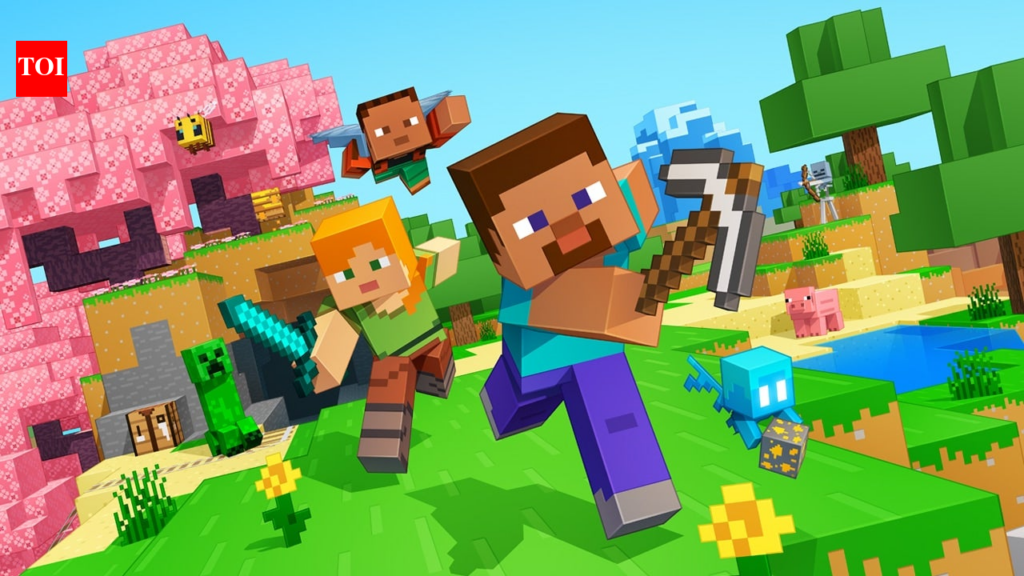
 AI agents tasked with building a Minecraft civilisation became bureaucratic. In an experiment involving 50 agents, four spent 11 minutes deciding who should fertilise a single wheat block. According to the supplied account of research by Y Combinator and Olam Labs, the group had three hours to build a thriving settlement, but its ambitions narrowed after zombies killed many agents during the first night.The researchers described how “four agents spent 11 minutes appointing a ‘sole fertilizer operator’ for a single piece of bone meal on a single wheat block.” The episode illustrated a coordination problem within the group: even a small farming task became an exercise in assigning responsibility. Researchers said the behaviour “felt similar to patterns seen while working with coding agents.”
From building a civilisation to cautious survival
The collaborative experiment, called Civ50, placed the agents in Minecraft to observe how they organised themselves around a shared goal. AI agents are software systems that can take actions through tools, rather than simply answer questions.The supplied account identifies the participants as GPT-6.1 Sol agents. Although deaths during the first night carried little penalty, the attack disrupted their plans. Researchers noted that “many ambitious initial tasks were abandoned.”The colony subsequently focused on surviving cautiously rather than developing into the thriving civilisation envisioned at the start. The prolonged discussion over fertiliser was one example of the bureaucracy that emerged.The researchers used gaming environments to investigate how groups of agents cooperate, handle setbacks and compete. Such experiments could help developers identify coordination problems, although the observed behaviour came from specific game scenarios.
Rival teams took different approaches
Separate competitive tests compared GPT-6.1 Sol and Claude Opus 5.5 agents. In Bed Wars, a Minecraft game mode involving attacks on rival bases while defending a team’s own, each side had 10 agents.“GPT agents came up with much more aggressive and elaborate strategies,” the researchers reported. Claude agents adopted a more defensive approach.A technical problem also exposed differences in how the teams responded to obstacles.“A tool bug stopped block-breaking. GPT diagnosed it and shared workarounds; several Claudes concluded breaking was impossible,” researchers wrote.In a separate Mindustry strategy-game test, GPT agents won six of seven games against Claude agents. Researchers described the GPT teams as operating more like a hive, while Claude teams combined a single leader with a more democratic decision process. These results come from the reported game tests, not a general ranking of the models’ capabilities.The researchers have made the swarm setups open source, allowing others to investigate questions such as whether changing the number of agents or combining different models produces different group behaviour.