
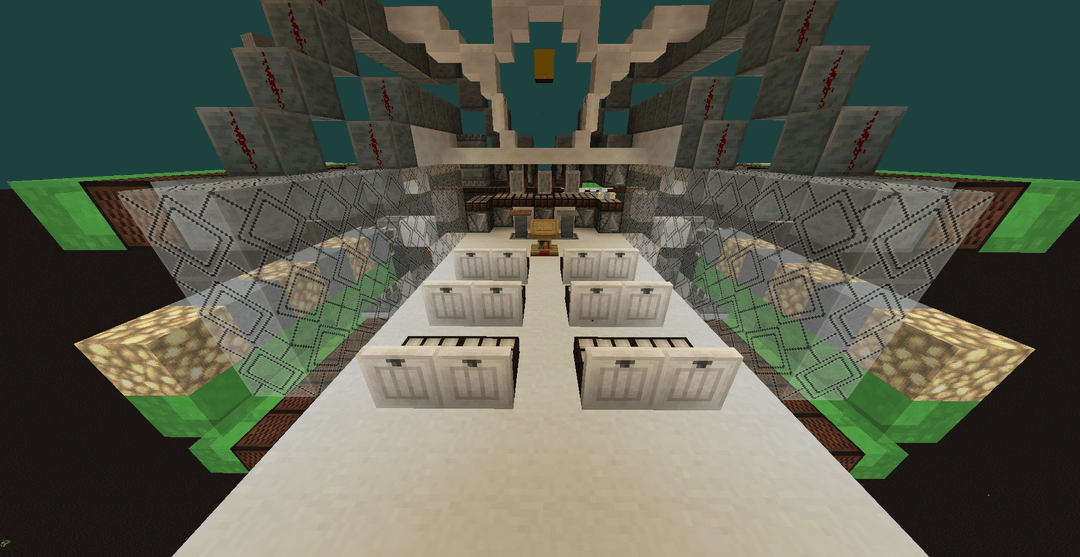
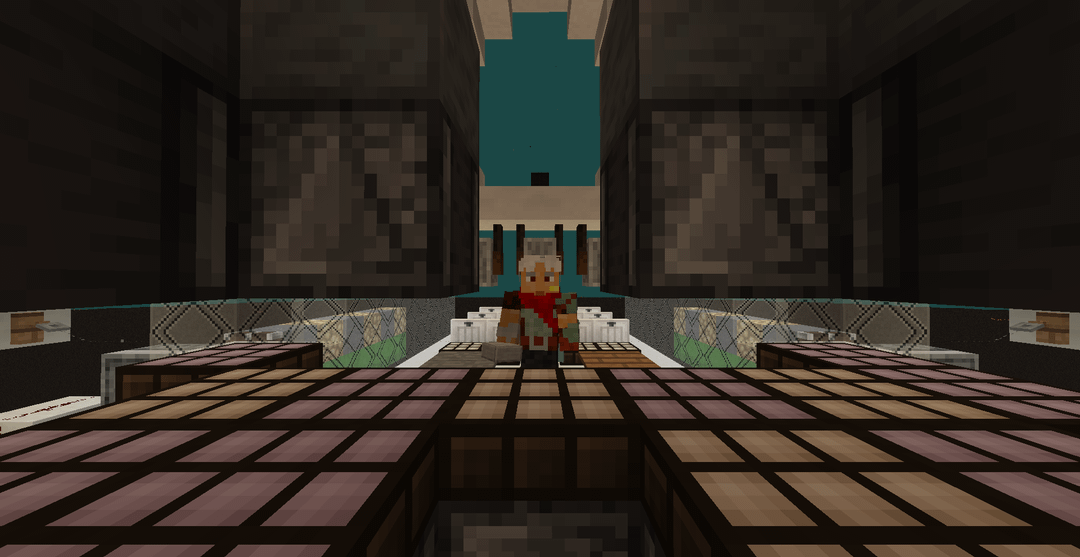
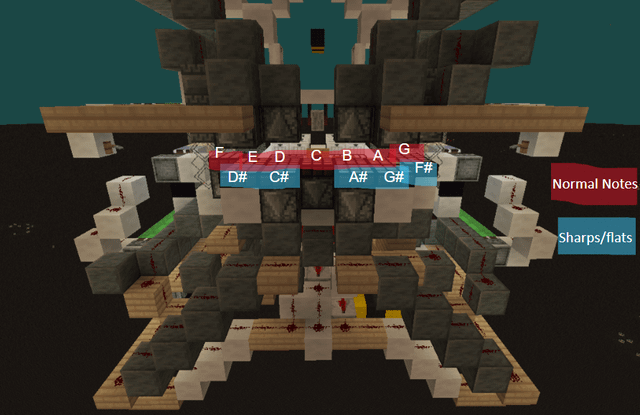
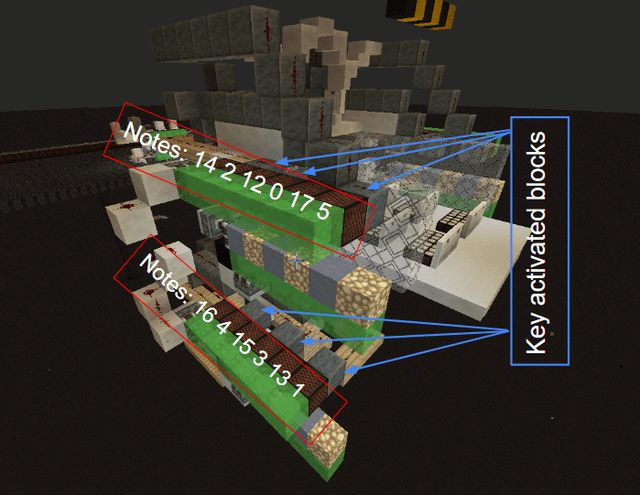
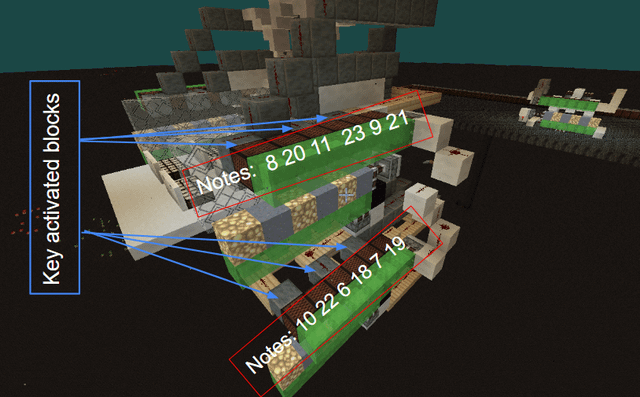
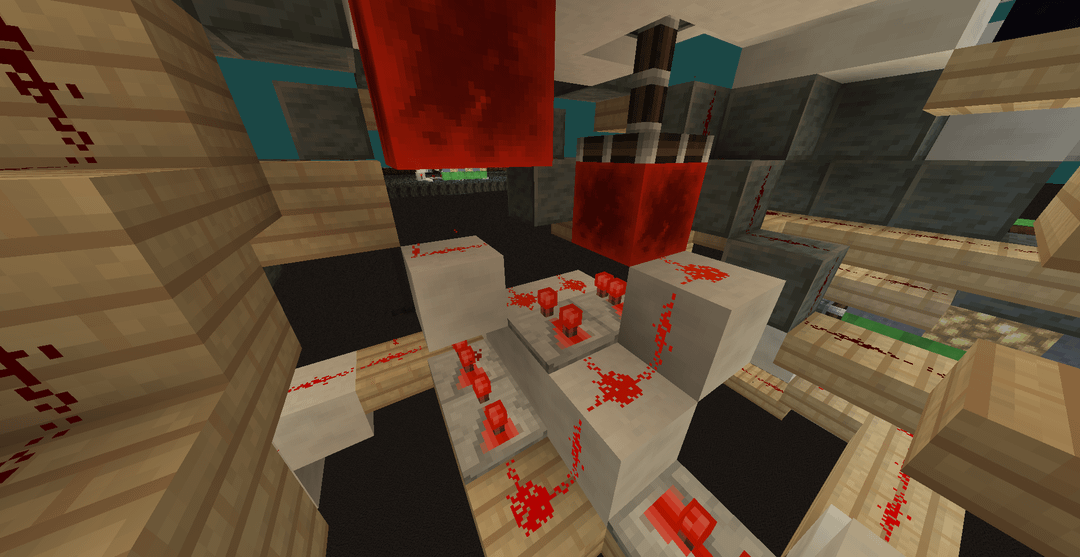
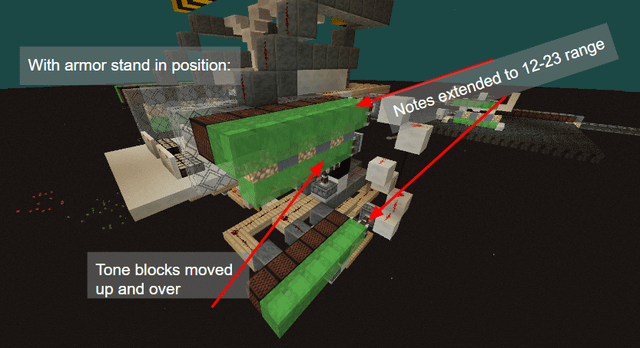
This piano uses daylight detectors as keys that can activate noteblocks by right-clicking them to send an observer pulse directly to the noteblock. This results in quite a bit of spaghetti redstone, but minimizes any delay from key to sound. Half of the notes are detected underneath and the other half from above. This is really the only way the setup will work so that redstone lines can be made in a non-intersecting manner. I also ran the redstone lines so that there could be a central area where all noteblocks would be audible. I designed this a few months ago but Xisumavoid’s recent Hermitcraft video with a “Big” style piano inspired me to share it now.
An important note about daylight detectors as keys though means that this has to either be built entirely underground where the sky light level will not change or in the end or nether where there is no day/night cycle or else you will have a bunch of notes going off as time changes. If you want to build this above ground, you can replace the daylight detector with repeaters or comparators, but I think the daylight detectors look the best and most piano-like.
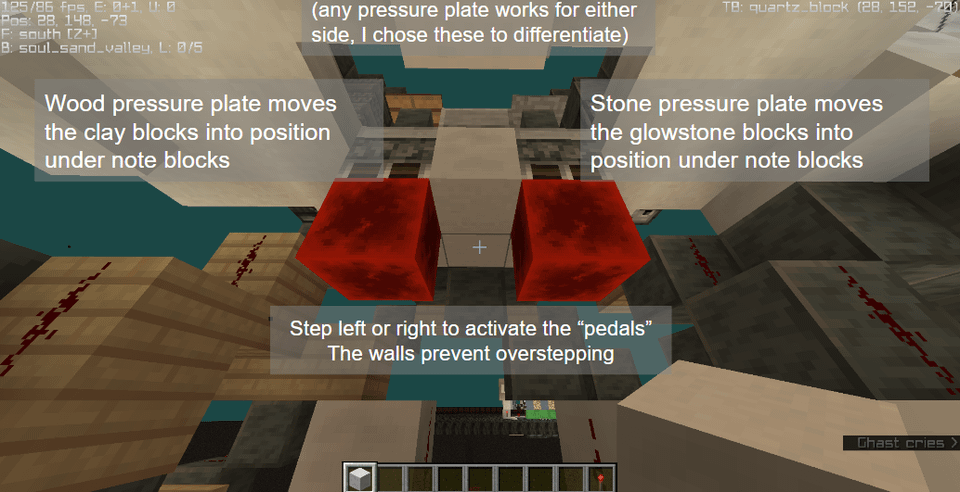
The other bells and whistles about this piano though: not only does it include a full octave in range of the player, but there is a tripwire to move up an octave and two pedals to enable two unique tone blocks aside from the default (air block underneath).
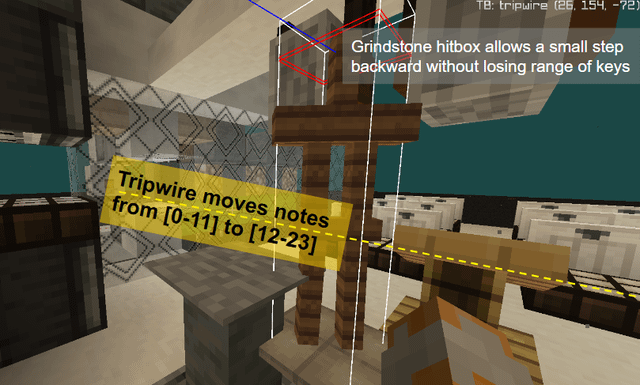
Note blocks can be tuned to a value between 0 and 24 ranging from F# to F# two octaves above. You can make a full octave from values 0-11 ranging from F# to F, and then a whole extra octave with values 12-23. (You could also use 1-12 and 13-24 for G to F#, but this piano uses the other way) In this build, a tripwire engages pistons to shift from one set of noteblocks to the next. To engage the tripwire from the playing position, a player just needs to take a small step backward.
Pedals (pressure plates on walls) are placed to either side of the playing position. One pedal will push up a set of blocks to be underneath the noteblocks. The other pedal will both push up and shift over the collection of blocks so you can have two distinct tone blocks as shown in the screenshots. For this build I chose glowstone and clay blocks as the alternative tones. The default (air block) tone enables mid-range octaves (3 and 4) but different blocks can have lower or higher octaves. *Here, a higher octave is enabled with the flute tone that comes from the clay blocks, but overall only 3 unique octaves are represented. With other blocks, this could be designed to have octaves ranging from 1 to 6. **Technically, because of the ability to change the noteblock tones, you could call this an organ or even a synthesizer.
Now you may have noticed that it is quite cumbersome – nobody is going to be playing Chopin on this thing. The input really limits to just a note at a time and the mouse control to quickly play notes is tough. I would love if anyone comes up with a way to play chords without hard-wiring for them.
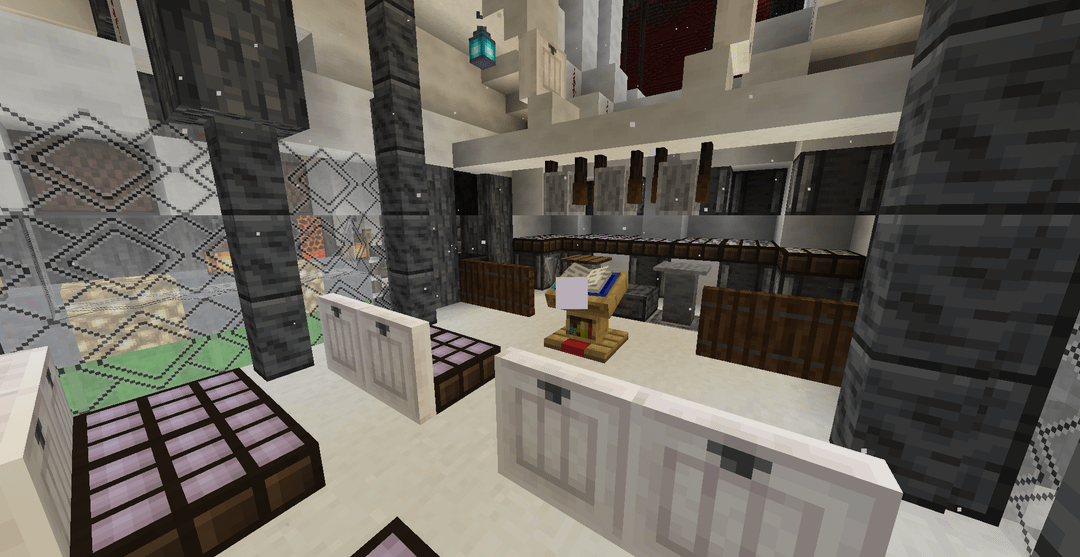
The last image is the same build done in survival (an economy server) with some decor around. I have uploaded a small demonstration video on my reddit profile – I'll share a link in the comments if that is allowable in this sub.
by abros_vii